Present-Moment Attention
Grounding with colouring by noticing what is visible and tangible now.
Grounding activities direct attention toward the present environment or body. Colouring can offer visual detail, physical contact with paper and repeated movement. It is one possible technique, not an emergency response, trauma treatment or universal solution.
Clear answer
A simple colouring-based grounding exercise
Place both feet or another comfortable point of support against a surface. Name three colours, two shapes and one physical sensation you notice. Begin colouring one small area and keep returning to the line, pressure and movement. Stop if focusing on the activity increases distress.
Why people choose it
A practical resource with room for individual choice.
Visual detail
Shapes, edges and colour differences give attention specific present-moment information.
Physical feedback
The pencil, paper and supporting surface provide touch and movement to notice.
Clear sequence
Choose, colour, pause and check in—a short series of actions that can be explained simply.
01 · Practical guidance
Use the senses that feel safe and available
Grounding advice is often presented as a fixed list of things to see, hear, smell and touch. Not every sense or body focus feels comfortable for every person. Colouring naturally emphasises sight and hand movement, but the activity can be adapted around sensory needs.
Notice a line, the pencil’s colour, pressure against the page or contact with the chair or floor. Avoid insisting on closed eyes, deep breathing or internal body awareness if those elements are not helpful. Choice is an important part of feeling safe enough to engage.
- Name visible colours and shapes
- Notice contact with a stable surface
- Follow one line with your eyes
- Pause or stop if distress rises
02 · Practical guidance
Keep the exercise concrete during high emotion
A reflective prompt may be useful later, but it can add cognitive demand when someone is already overwhelmed. Begin with the artwork and immediate sensory details. Use short, neutral language such as “choose one colour” or “find the next edge” rather than asking for an explanation of feelings.
When enough capacity returns, the person can decide whether to read the prompt or discuss what happened. Grounding should support contact with the present, not force disclosure or analysis before the person is ready.
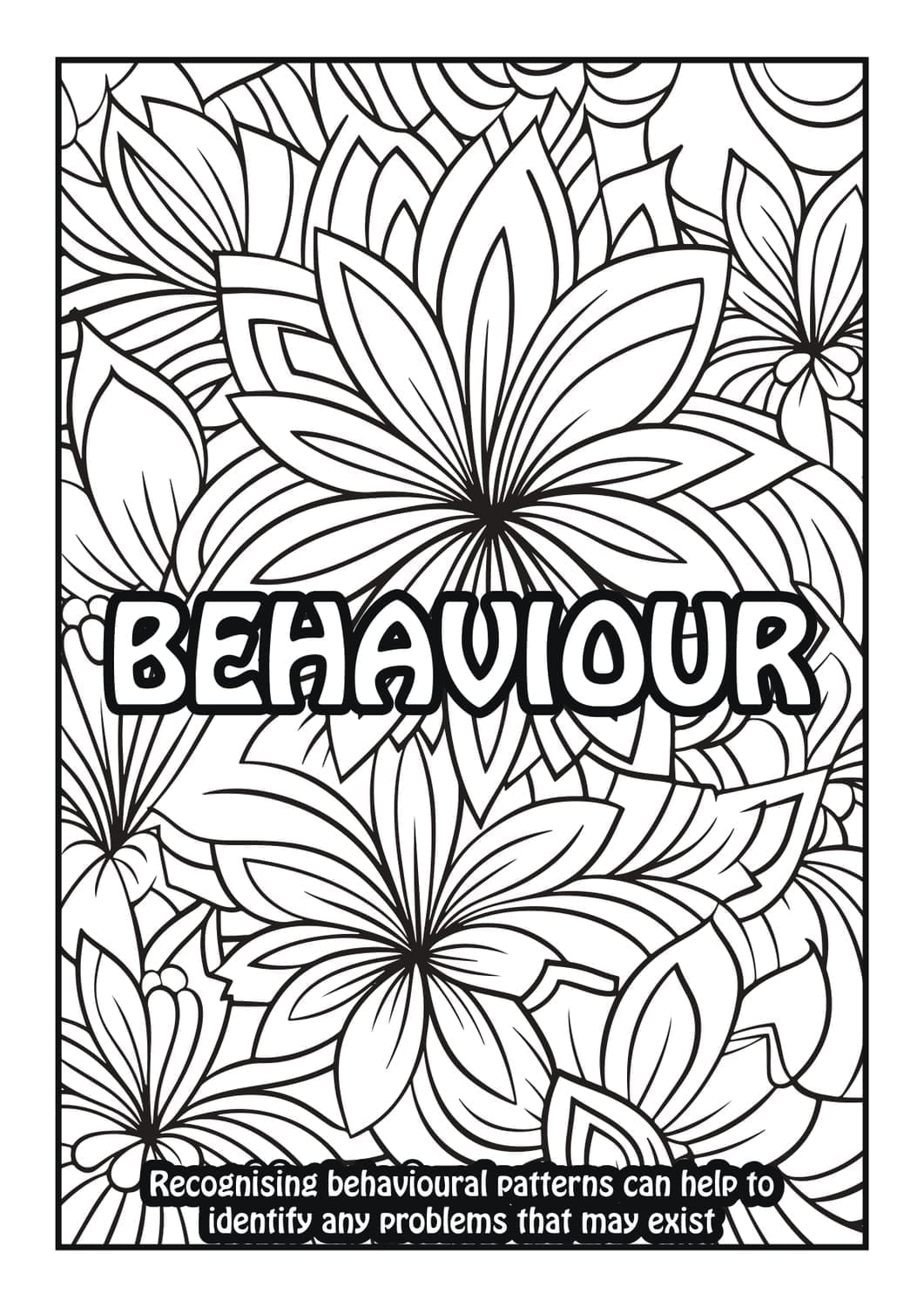
Inside the resource
One design, one prompt and space to use both your way.
Every page combines detailed artwork with a concise prompt connected to thoughts, feelings, behaviours, perspective or everyday wellbeing. The prompts are invitations rather than tests.
- 50 large-format A4 pages
- CBT-inspired reflection wording
- Printed book and separate eBook
- Suitable for personal and supported use where appropriate
03 · Practical guidance
Know the limits of a self-help exercise
If someone is in danger, unable to stay safe or experiencing a mental health crisis, move beyond a colouring exercise and seek urgent help. Call 112 or 999 in an emergency in Ireland. HSE guidance and free listening services are linked below.
For recurring distress, speak with a GP or qualified mental health professional. A grounding page may still be part of an agreed support plan, but it should not delay assessment or appropriate care.
A simple process
A sight–touch–movement grounding sequence
Orient
Look around the page and name three colours or shapes that are definitely present.
Connect
Notice the pencil in your hand and one stable point of contact with a chair, desk or floor.
Move
Colour one small area while following the line and pressure of each stroke.
Check
Pause and decide whether continuing, stopping or contacting someone is the safest useful next step.
Choose your format
One complete resource. Two practical ways to use it.
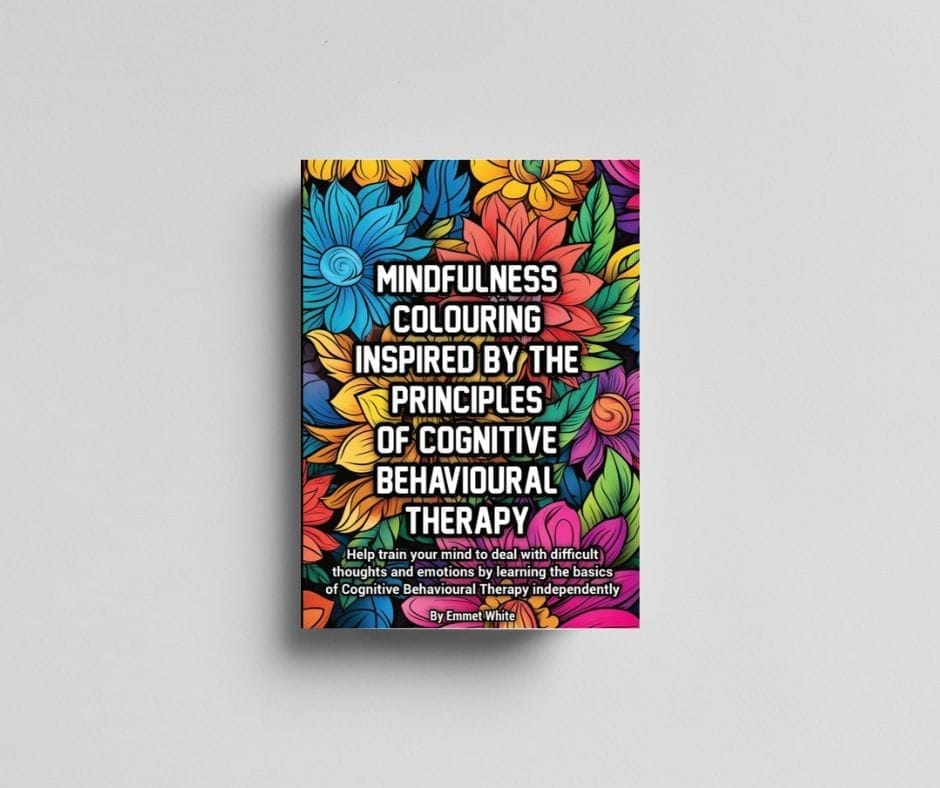
Mindfulness Colouring Book
A ready-to-use physical book with all 50 pages together.
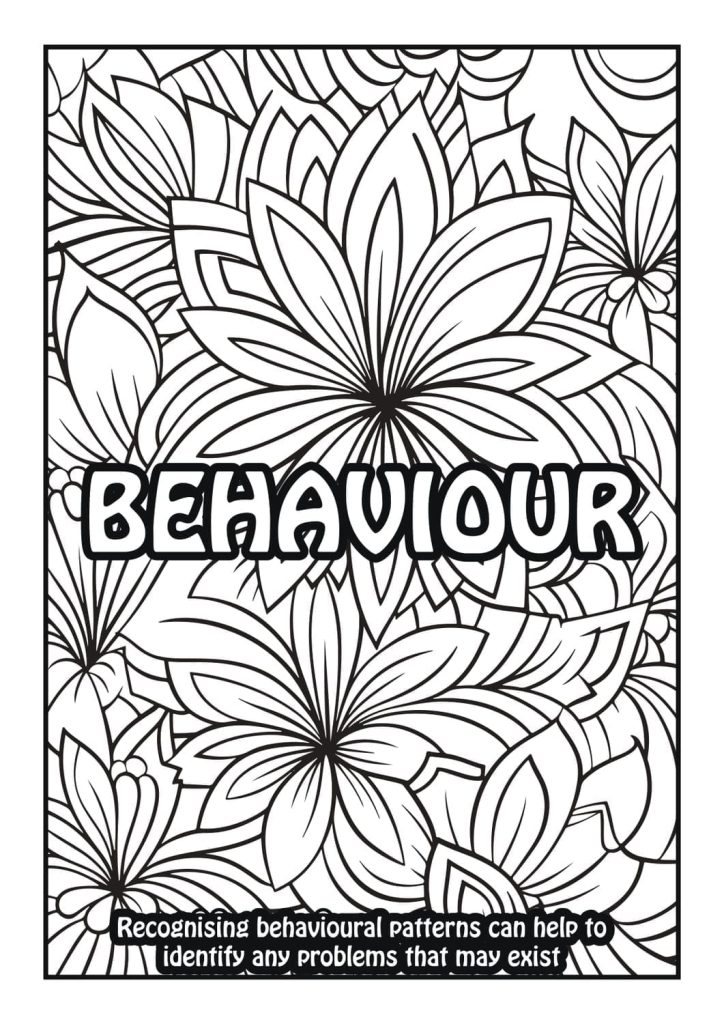
Mindfulness Colouring eBook
Download the eBook and print authorised pages when needed.
Authoritative information
Check current official guidance.
Questions answered
Frequently asked questions.
These answers describe the resource accurately and avoid promises that a colouring book cannot make.
Is grounding the same as relaxation?
Not necessarily. Grounding focuses attention on the present. A person may feel calmer, but relaxation is not required for the exercise to have been attempted.
Should I use the reflection prompt while distressed?
Only if it feels manageable. Start with concrete visual and physical details, and leave reflective work until there is enough capacity.
Can a teacher or counsellor guide the exercise?
They may offer it within their role and knowledge of the person, while respecting choice and following existing support and safeguarding procedures.
When should I seek more help?
Seek professional support when distress is persistent, worsening or affecting daily life. In immediate danger in Ireland, call 112 or 999.
Important support information
A colouring book is not crisis or clinical support.
Talk to a GP or qualified mental health professional when distress is persistent, worsening or affecting daily life.
EZ Wellbeing
Keep a concrete grounding option within reach.
Try the sample page or explore 50 designs in print and digital formats.