Professional Use Guide
Using mindfulness colouring in counselling with purpose, consent and clear boundaries.
A colouring page can support settling, shared attention or reflection for some clients. Its usefulness depends on the therapeutic relationship, the client’s preferences and the counsellor’s judgement. The activity should serve the work rather than become a standard exercise applied to everyone.
Clear answer
When might colouring fit a counselling session?
It may be considered at the beginning of a session, during conversation, as a transition after demanding material or as optional between-session activity. It is not a diagnostic instrument, a replacement for an evidence-based intervention or proof that a client is regulated because they appear quiet.
Why people choose it
A practical resource with room for individual choice.
Adjustable intensity
A client can focus on artwork alone or engage with a prompt when that depth feels appropriate.
Less direct attention
Side-by-side activity may feel more comfortable than sustained eye contact for some clients.
Tangible continuity
A page can provide a concrete reminder of an agreed idea between sessions when suitable.
01 · Practical guidance
Make the rationale explicit and collaborative
Introduce the option in plain language and explain why it may be relevant. For example: “Some people find it easier to settle while their hands have a task. Would you like to try a page, talk without it or choose something else?” This keeps the intervention transparent and gives the client a meaningful choice.
Revisit consent during use. A client who initially agrees may become frustrated, distracted or uncomfortable. Stopping or changing approach should be easy and should not be interpreted as resistance without careful context.
- Agree the purpose before beginning
- Keep another option available
- Do not infer meaning from colour choices
- Document use only as appropriate to professional practice
02 · Practical guidance
Use CBT-inspired prompts within competence
The prompts refer broadly to thoughts, feelings, behaviour and perspective. A practitioner can integrate a relevant idea within their own formulation and approach, or ignore it when it does not fit. The existence of a printed prompt does not make it clinically suitable for every client.
Counsellors should avoid presenting the book as CBT treatment. Where CBT is being delivered, it requires the practitioner’s training, assessment and tailored work; the colouring page is at most one supporting resource within that process.
Inside the resource
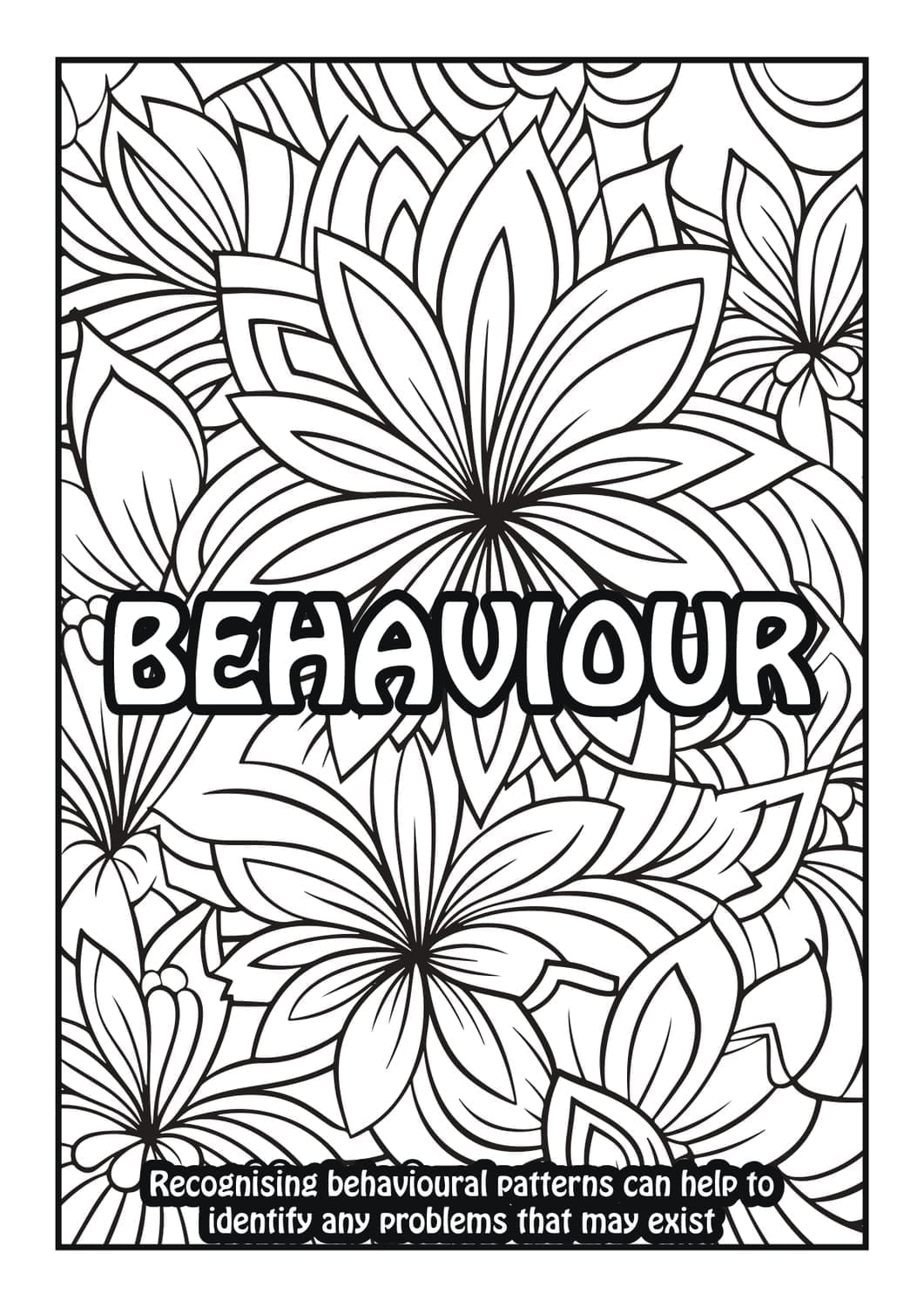
One design, one prompt and space to use both your way.
Every page combines detailed artwork with a concise prompt connected to thoughts, feelings, behaviours, perspective or everyday wellbeing. The prompts are invitations rather than tests.
- 50 large-format A4 pages
- CBT-inspired reflection wording
- Printed book and separate eBook
- Suitable for personal and supported use where appropriate
03 · Practical guidance
Consider privacy, ownership and between-session use
Agree who keeps a completed page and how it is handled. Artwork created during a session may contain notes or feel personal even when it reveals nothing clinically. Apply the same care used for other client materials and records.
If a page is offered between sessions, explain that completion is optional and discuss what the client should do if difficult feelings arise. A generic resource should never become a substitute for an agreed safety or support plan.
A simple process
A consent-led way to introduce colouring
Form a rationale
Identify the client-specific purpose and whether colouring fits the current therapeutic work.
Offer alternatives
Present the page as one option and make declining or stopping straightforward.
Observe collaboratively
Check how the activity is experienced rather than assuming stillness means calm.
Integrate or leave
Connect the prompt to the work only when useful; otherwise return attention to the client’s own priorities.
Choose your format
One complete resource. Two practical ways to use it.
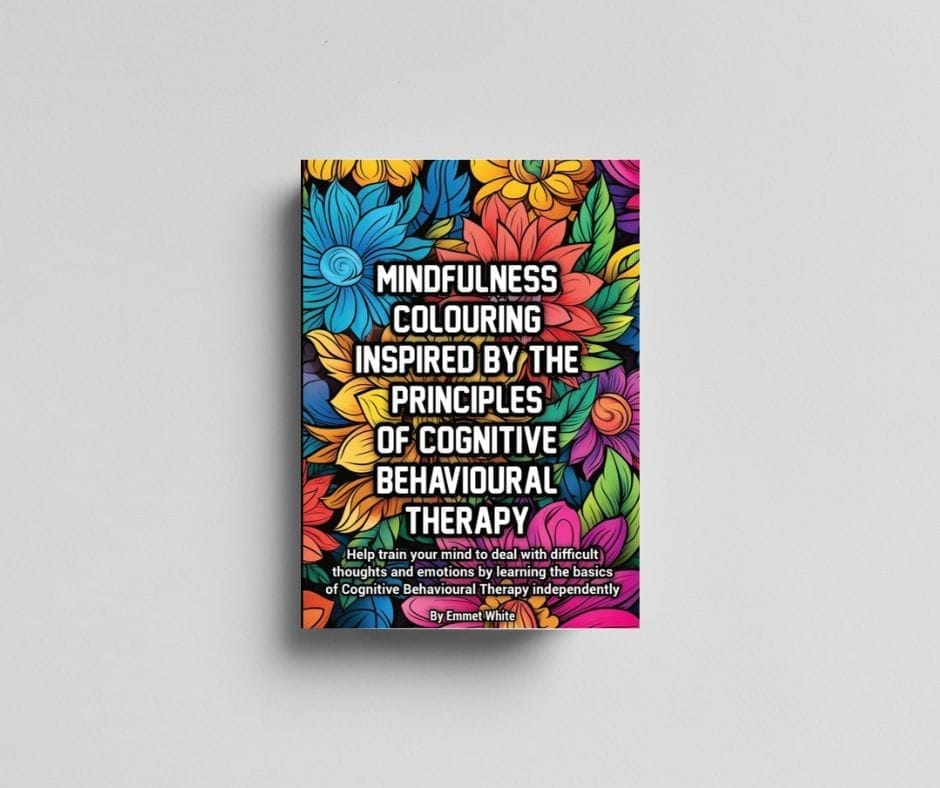
Mindfulness Colouring Book
A ready-to-use physical book with all 50 pages together.
Mindfulness Colouring eBook
Download the eBook and print authorised pages when needed.
Questions answered
Frequently asked questions.
These answers describe the resource accurately and avoid promises that a colouring book cannot make.
Is colouring appropriate for every counselling client?
No. Suitability depends on preference, goals, formulation, sensory and motor needs, current state and the practitioner’s judgement.
Can colours be interpreted psychologically?
The EZ Wellbeing book is not a projective test. Colour choices should not be assigned diagnostic meanings.
Does using a CBT-inspired page mean I am delivering CBT?
No. A prompt does not constitute a model of therapy. Practitioners should describe their work accurately and remain within competence.
Are practice orders available?
Yes. Counsellors, therapists and wellbeing practices can ask about current pricing for multiple printed copies or appropriate digital use.
Important support information
A colouring book is not crisis or clinical support.
Talk to a GP or qualified mental health professional when distress is persistent, worsening or affecting daily life.
EZ Wellbeing
Choose a resource that fits around your professional approach.
View the book or request pricing for a counselling practice or service.