Practical Guide
How mindful colouring works—without needing to empty your mind or perfect the page.
Mindful colouring means bringing attention to the act of colouring and returning to it when the mind wanders. The design gives attention somewhere specific to go. The practice is simple, but it is not a guaranteed treatment for stress, anxiety or any mental health condition.
Clear answer
Mindful colouring in one sentence
Choose a page, notice colour, shape and movement, and repeatedly bring attention back to the area you are colouring. Thoughts and feelings do not need to disappear. The mindful part is noticing distraction and returning with less judgement, for a period that suits you.
Why people choose it
A practical resource with room for individual choice.
External focus
The line and colour in front of you provide an immediate object for attention.
Gentle repetition
Filling small areas creates a sequence of clear actions without requiring a complex plan.
Visible stopping point
A section, page or timer can define the end of the practice and make it easier to fit into daily life.
01 · Practical guidance
Attention will wander—and that is part of the practice
People sometimes assume mindfulness means maintaining perfect focus or having no thoughts. That expectation can turn a calm activity into a frustrating test. During colouring, you may think about work, replay a conversation or plan the evening. The task is simply to notice and return to the next line, shape or colour.
Each return is useful practice in redirecting attention. There is no score and no requirement to count distractions. If the mind is especially busy, reduce the task to one small area and a limited palette.
- Look closely at the next shape
- Notice the pressure and speed of the pencil
- Observe colour without judging the choice
- Return after distraction as often as needed
02 · Practical guidance
The page creates structure, not a clinical effect
A pre-drawn design reduces the number of decisions compared with making art from a blank page. That can make the activity easier to start. Repeated movement and visible progress may feel calming or satisfying for some people, while others may find detail tedious or uncomfortable.
Individual response matters. Mindful colouring should be offered as an experiment or preference, not prescribed as something that must work. A person can stop, choose another page or use a different mindfulness activity.
Inside the resource
One design, one prompt and space to use both your way.
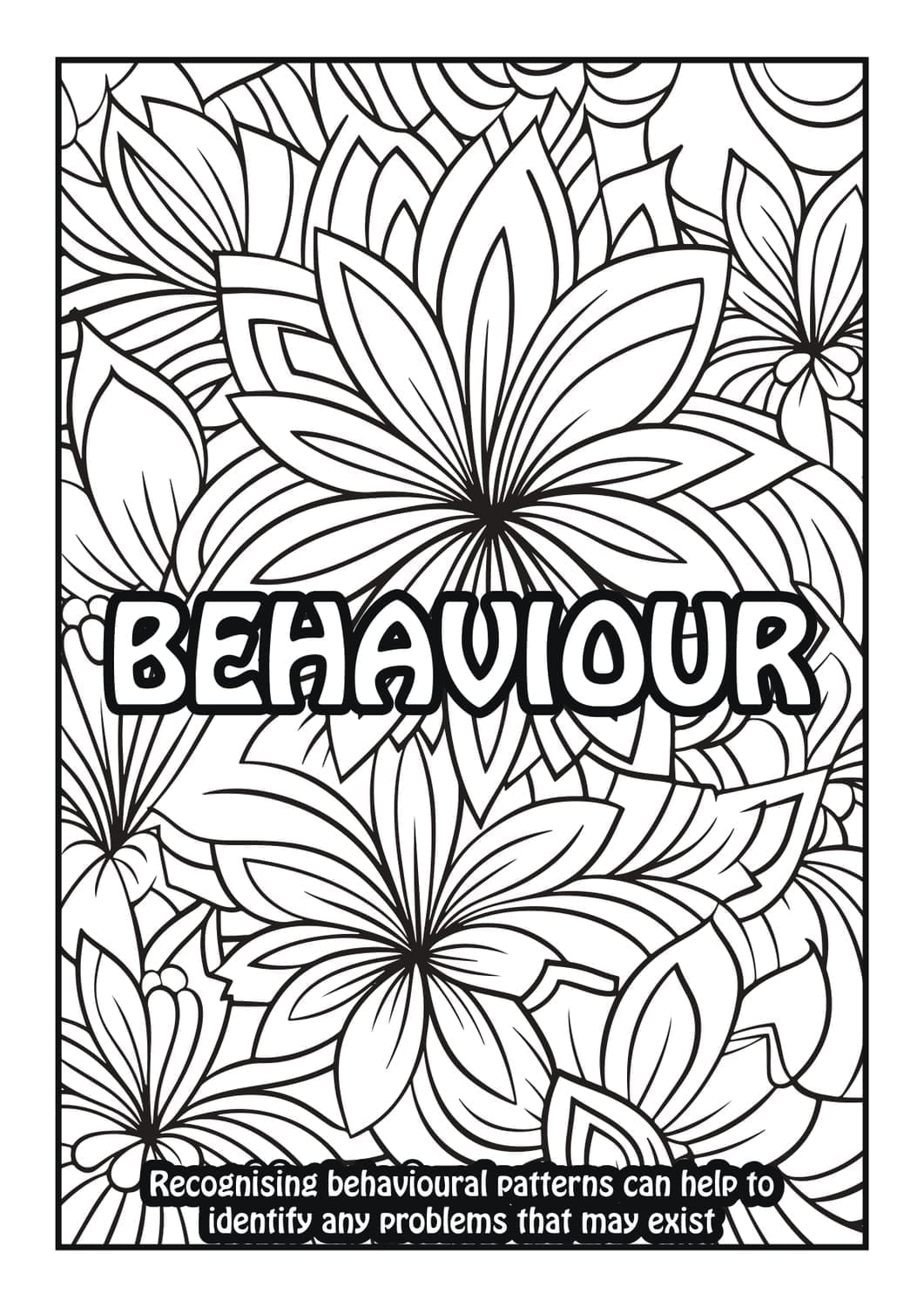
Every page combines detailed artwork with a concise prompt connected to thoughts, feelings, behaviours, perspective or everyday wellbeing. The prompts are invitations rather than tests.
- 50 large-format A4 pages
- CBT-inspired reflection wording
- Printed book and separate eBook
- Suitable for personal and supported use where appropriate
03 · Practical guidance
Where reflection prompts add another layer
EZ Wellbeing places a short CBT-inspired idea alongside each design. The prompt can gently direct reflection toward a thought, feeling, habit or possible response. Because attention remains partly occupied by colouring, the idea may feel less like a blank worksheet demanding an immediate answer.
The prompt is optional. Mindful colouring still works as an attention practice when the words are skipped, and the user can return to them on a different day.
A simple process
Try mindful colouring for the first time
Set up
Use one page, a few pencils and a comfortable surface; remove avoidable notifications.
Arrive
Take one slow look across the design and choose the easiest place to begin.
Return
Each time you notice the mind elsewhere, move attention back to the pencil and current shape.
Finish deliberately
Stop at the chosen time or a natural point and notice how the activity felt without demanding a result.
Choose your format
One complete resource. Two practical ways to use it.
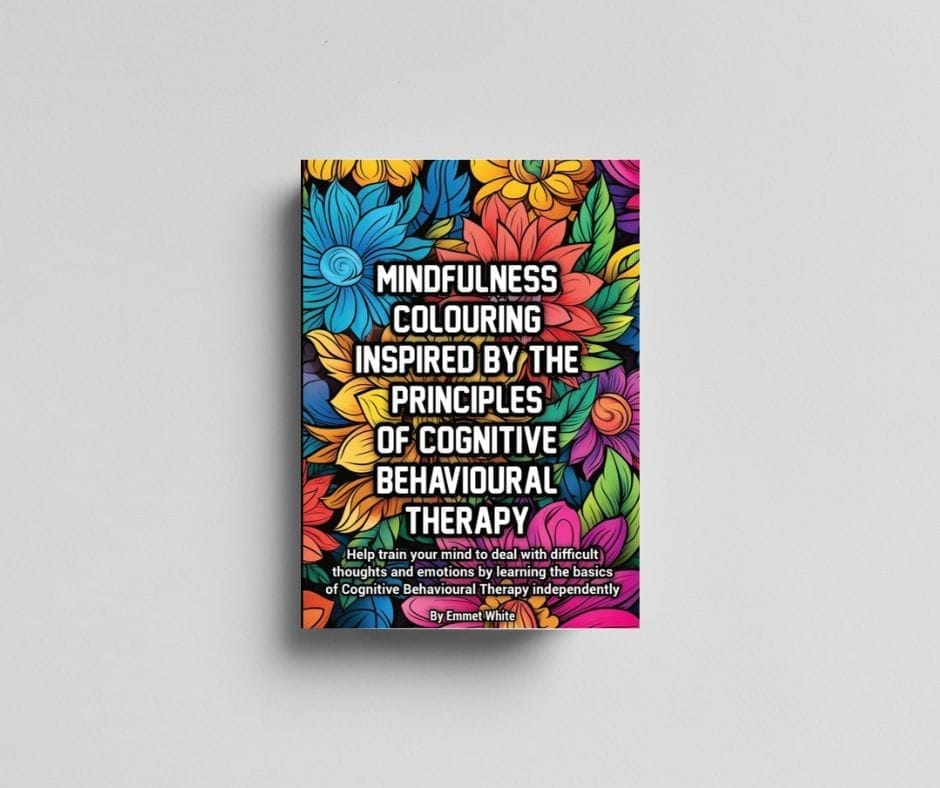
Mindfulness Colouring Book
A ready-to-use physical book with all 50 pages together.
Mindfulness Colouring eBook
Download the eBook and print authorised pages when needed.
Questions answered
Frequently asked questions.
These answers describe the resource accurately and avoid promises that a colouring book cannot make.
Is mindful colouring the same as meditation?
It can be a mindfulness practice, but it is different from many seated meditations because attention is supported by a visual and physical activity.
Do I have to colour slowly?
There is no required speed. A pace that lets you notice what you are doing is more useful than deliberately rushing to finish.
What if colouring makes me more frustrated?
Stop or simplify the activity. Try a less detailed page, fewer colours or another form of mindful attention. The practice should not become a demand.
Will mindful colouring treat anxiety?
No treatment claim is made. It may provide a calm or grounding activity for some people, but anxiety that affects daily life deserves appropriate professional support.
Important support information
A colouring book is not crisis or clinical support.
Talk to a GP or qualified mental health professional when distress is persistent, worsening or affecting daily life.
EZ Wellbeing
Try the process on one real page.
Open the free sample or explore the complete printed and digital books.