A Plain-Language Introduction
Understanding the CBT connection between thoughts, feelings and behaviours.
Cognitive Behavioural Therapy often examines how interpretation, emotion and action influence one another. Learning the basic connection can support reflection, but reading this guide or using a colouring prompt is not the same as receiving CBT from a qualified professional.
Clear answer
The connection in a simple example
Imagine sending a message and receiving no reply. The thought “They are angry with me” may bring anxiety and repeated checking. The thought “They may be busy” may create a different feeling and allow another action. The situation is unchanged; the interpretation influences what may follow.
Why people choose it
A practical resource with room for individual choice.
Notice the interpretation
Separating a thought from the situation can reveal where an assumption has been treated as a fact.
Name the response
Identifying emotion and action makes the pattern more visible without declaring either morally wrong.
Create another option
A balanced thought or small behaviour change can open a different next step.
01 · Practical guidance
A thought is not automatically a fact
Thoughts can be accurate, partly accurate, uncertain or strongly shaped by mood and past experience. Noticing a thought does not mean arguing with yourself or replacing every concern with positive language. It means creating enough distance to ask what supports the thought and what other explanation is possible.
A balanced thought should still respect the evidence. “Everything will be perfect” is usually no more useful than “Everything will go wrong.” A fairer statement might be: “This is difficult, and I can take one step or ask for help.”
- What happened that anyone could observe?
- What did I tell myself it meant?
- What feeling and action followed?
- What is one fair alternative or useful next step?
02 · Practical guidance
Behaviours can maintain or change a pattern
Avoiding a task may reduce anxiety immediately, which makes avoidance tempting again. Over time, the unfinished task can increase stress. A small behaviour change—opening the document, asking one question or working for five minutes—may provide new information about what is manageable.
This does not mean every difficult situation can be solved by changing behaviour. Real barriers, illness, discrimination, unsafe conditions and lack of support require practical responses. CBT reflection should not be used to blame a person for circumstances around them.
Inside the resource
One design, one prompt and space to use both your way.
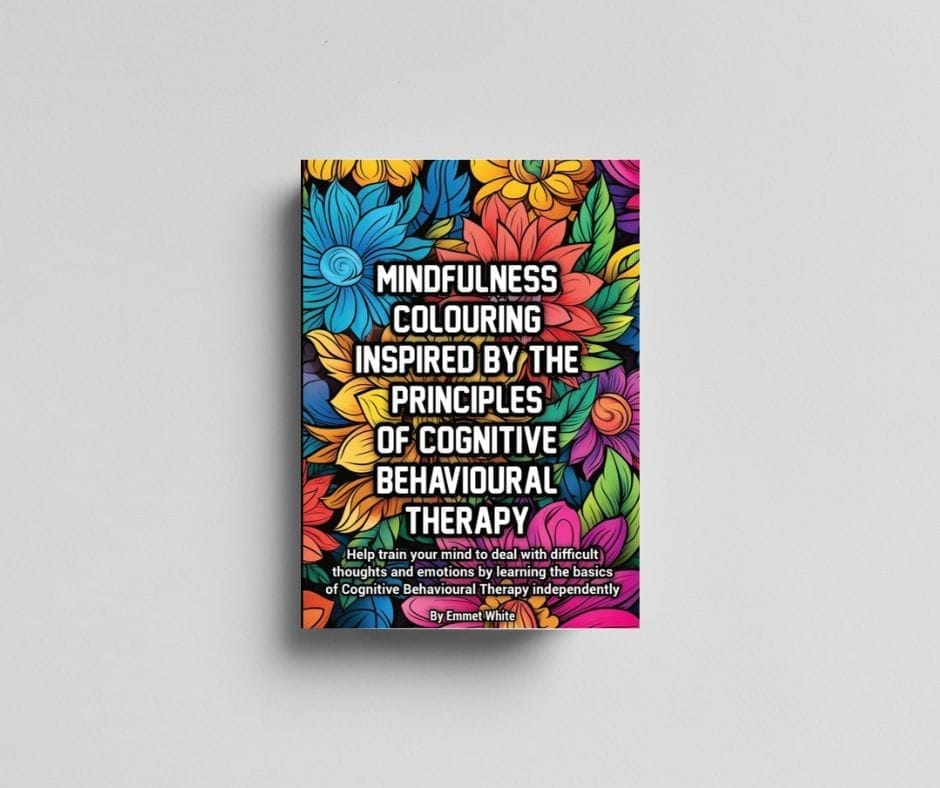
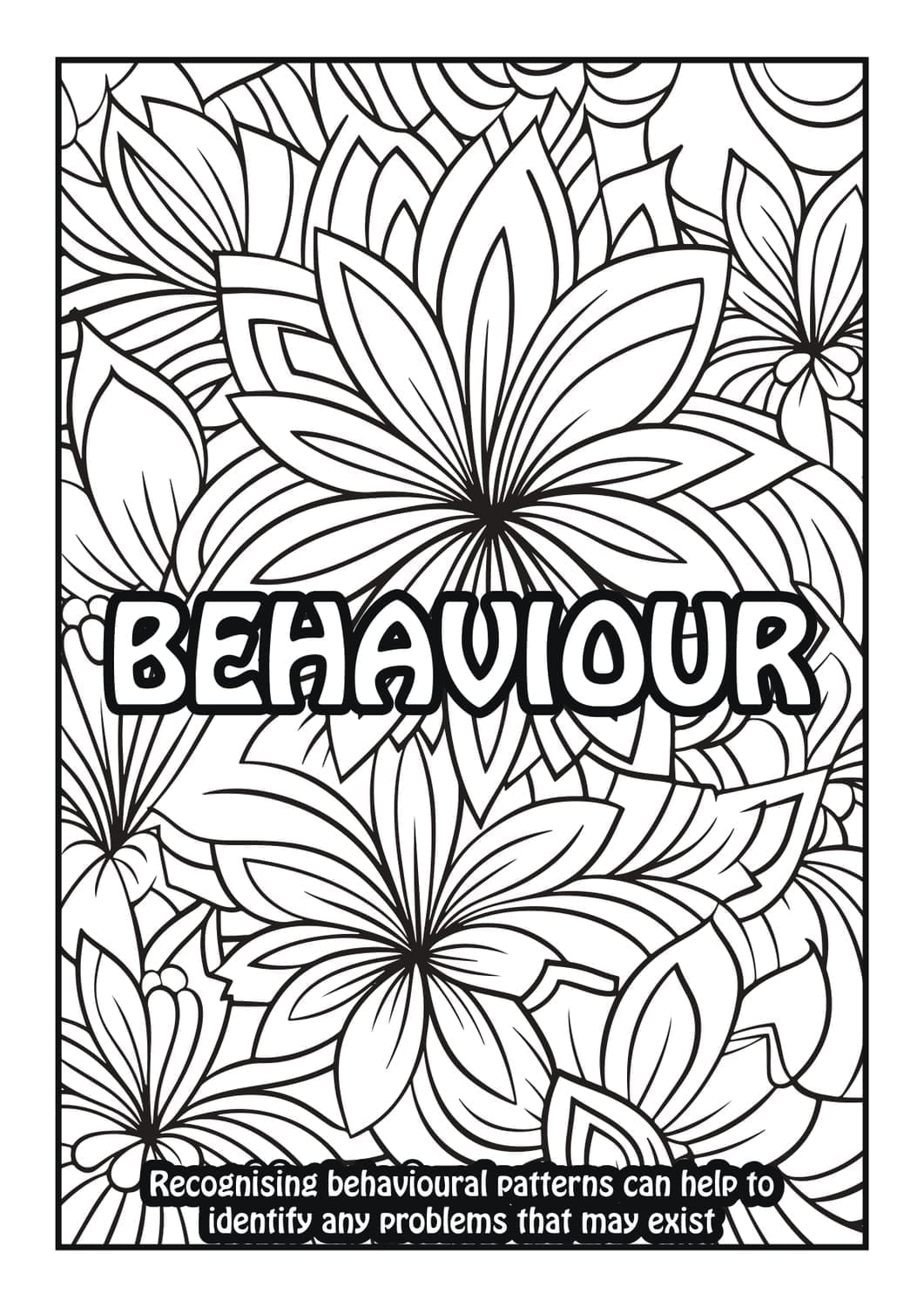
Every page combines detailed artwork with a concise prompt connected to thoughts, feelings, behaviours, perspective or everyday wellbeing. The prompts are invitations rather than tests.
- 50 large-format A4 pages
- CBT-inspired reflection wording
- Printed book and separate eBook
- Suitable for personal and supported use where appropriate
03 · Practical guidance
How the colouring prompt can hold the idea lightly
A concise prompt can sit beside a creative task without requiring a full written worksheet. The user may notice one everyday example while colouring or simply become familiar with the language of thoughts, feelings and actions.
For deeper or repeated patterns, a qualified professional can provide tailored assessment and therapy. The EZ Wellbeing book remains a general reflection resource rather than a clinical intervention.
A simple process
Reflect on one manageable situation
Describe
State what happened using observable details and leave out interpretation for the first sentence.
Notice
Write or think of the first meaning, prediction or judgement that appeared.
Connect
Name the feeling and action that followed, including anything you avoided or repeated.
Balance
Consider a fair alternative interpretation or one small next behaviour that fits the evidence.
Choose your format
One complete resource. Two practical ways to use it.
Mindfulness Colouring Book
A ready-to-use physical book with all 50 pages together.
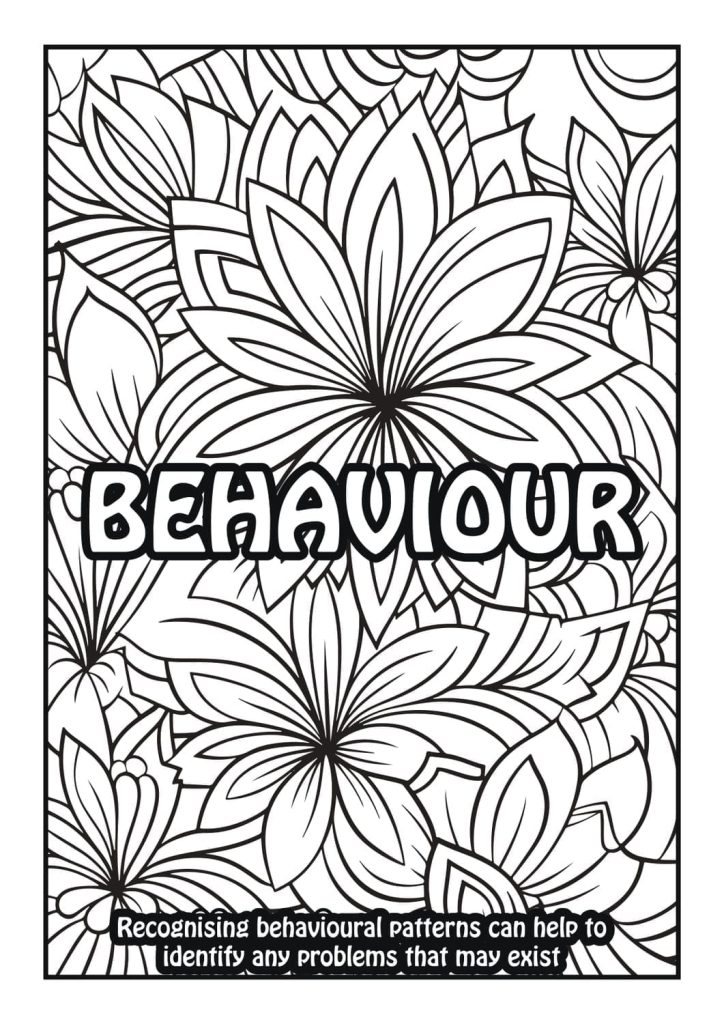
Mindfulness Colouring eBook
Download the eBook and print authorised pages when needed.
Questions answered
Frequently asked questions.
These answers describe the resource accurately and avoid promises that a colouring book cannot make.
Are thoughts responsible for every feeling?
No. Emotions are influenced by many factors, including situations, relationships, health, body state, history and environment. The thought–feeling–behaviour model is one useful lens.
Does balanced thinking mean positive thinking?
No. Balanced thinking aims to be fair and evidence-aware. It can acknowledge difficulty, risk or disappointment while avoiding unsupported extremes.
Is this guide CBT therapy?
No. It is general information. CBT therapy involves a qualified professional, individual assessment and tailored collaborative work.
Can a colouring page teach the full model?
A page can introduce or reinforce one idea, but it cannot replace detailed teaching, formulation, practice and support.
Important support information
A colouring book is not crisis or clinical support.
Talk to a GP or qualified mental health professional when distress is persistent, worsening or affecting daily life.
EZ Wellbeing
See how one CBT-inspired idea fits on a creative page.
Try the free sample or explore the complete colouring resource.