
Additional Educational Needs
An AEN wellbeing resource that can be adapted around the learner.
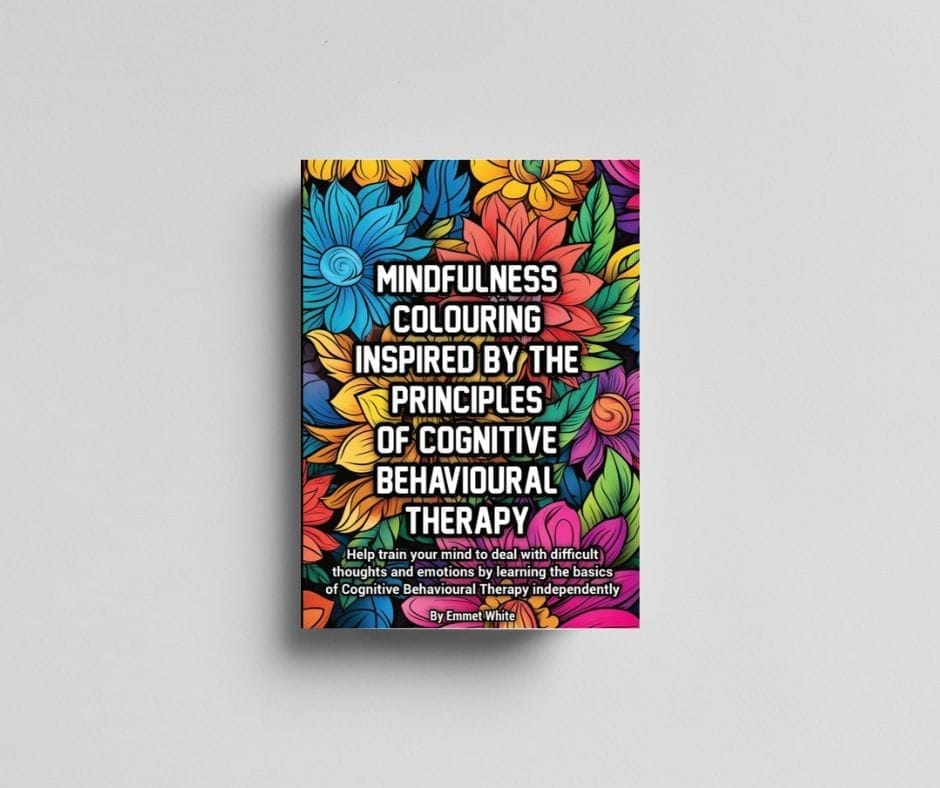
A familiar colouring page may be useful for some students during planned quiet work, transitions or supported reflection. The key is not the book alone; it is the way staff offer choice, understand sensory and communication needs, and fit the activity around each student’s existing supports.
Clear answer
Can mindfulness colouring support students with additional needs?
It may support some students and be unsuitable for others. Detailed designs, pencil pressure and predictable repetition can feel engaging, but the same features may create visual, motor or sensory demands. Staff who know the learner should choose, adapt and review the activity rather than using it as a universal regulation strategy.
Why people choose it
A practical resource with room for individual choice.
Predictable task
Clear boundaries on the page can make the beginning and next step of an activity easy to see.
Flexible communication
A student can colour silently, use a prompt with support or choose not to discuss personal feelings.
Adaptable duration
One section can be used for a short transition, while interested students can return for longer periods.
01 · Practical guidance
Start with the student, not the resource
A diagnosis or support category does not tell staff whether a student will enjoy colouring. Observe preferences and ask the student where possible. Consider fine-motor demand, visual complexity, sound in the room, lighting, smell of materials, seating, communication style and whether the activity has positive or negative associations.
Introduce a page when the student is settled enough to explore it. A new activity presented only during distress can quickly become linked with pressure. Familiarity and genuine choice make it more likely that the book can serve as one optional tool later.
- Offer a less detailed page or one small section
- Reduce the number of materials on the table
- Allow preferred positioning and movement breaks
- Provide a different activity without penalty
02 · Practical guidance
Use prompts without forcing emotional language
Some students use spoken emotional vocabulary easily; others communicate differently or prefer concrete language. A CBT-inspired prompt should be simplified, explained visually or skipped according to need. The value of the activity does not depend on a verbal answer.
Staff should avoid inferring a student’s emotional state from selected colours, speed or whether the page is completed. Those observations may guide a respectful check-in, but they are not diagnostic evidence and should be understood in the wider context.
Inside the resource
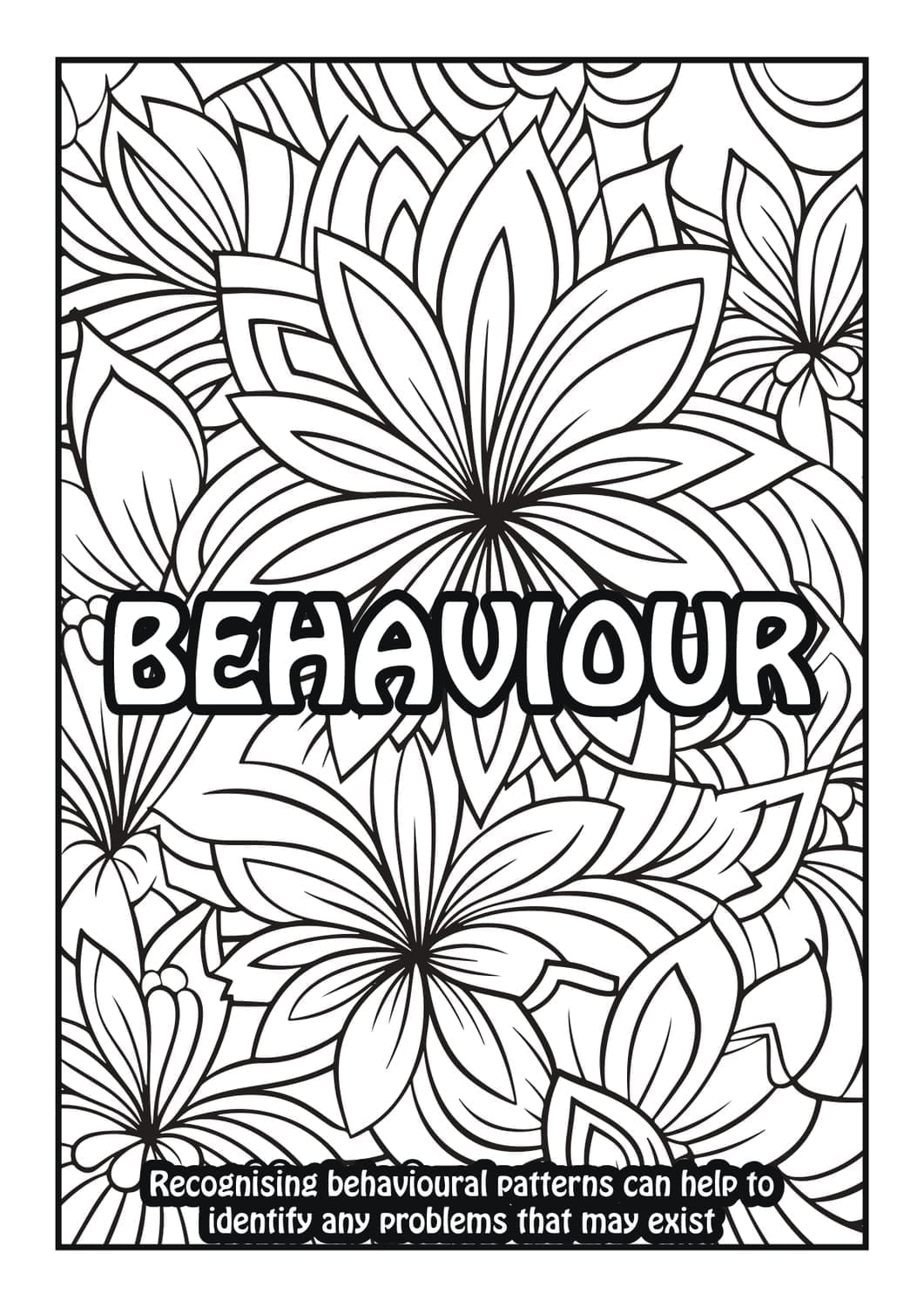
One design, one prompt and space to use both your way.
Every page combines detailed artwork with a concise prompt connected to thoughts, feelings, behaviours, perspective or everyday wellbeing. The prompts are invitations rather than tests.
- 50 large-format A4 pages
- CBT-inspired reflection wording
- Printed book and separate eBook
- Suitable for personal and supported use where appropriate
03 · Practical guidance
Fit the book into existing plans and supports
If a student has an agreed support, communication or regulation plan, the colouring activity should sit within it. It must not delay access to a known strategy, movement, a safe space, communication support or an appropriate adult. Completion should never be used as a condition for returning to class or receiving help.
Review use with the student and relevant team. A page that supports one transition may not be appropriate for another. The eBook offers selection flexibility, while an individual printed copy may be preferable for consistency and ownership.
A simple process
Adapt one page for an AEN setting
Observe
Identify whether colouring, paper and the available materials match this student’s interests and sensory profile.
Prepare
Select an appropriate page, reduce clutter and make an equivalent alternative available.
Offer
Use familiar communication to present the choice without making calm behaviour or completion a condition.
Review
Ask or observe whether the activity helped, was neutral or added demand, and adjust future use.
Choose your format
One complete resource. Two practical ways to use it.
Mindfulness Colouring Book
A ready-to-use physical book with all 50 pages together.
Mindfulness Colouring eBook
Download the eBook and print authorised pages when needed.
Questions answered
Frequently asked questions.
These answers describe the resource accurately and avoid promises that a colouring book cannot make.
Is the book specifically designed for autism?
No. It is a general CBT-inspired wellbeing colouring book that some autism classes and AEN settings may choose to adapt for individual learners.
Can colouring be used for self-regulation?
It can be one optional activity for some students. It should not replace the learner’s known strategies, communication supports or professional recommendations.
What if a student colours outside the lines?
There is no required result. The activity is not an art assessment, and staff should prioritise safe, comfortable engagement over neatness.
Should every student receive the same page?
Not necessarily. Page complexity, prompt, materials and duration can be differentiated. An alternative activity should be available where colouring is unsuitable.
Important support information
A colouring book is not crisis or clinical support.
Talk to a GP or qualified mental health professional when distress is persistent, worsening or affecting daily life.
EZ Wellbeing
Choose a flexible resource, then adapt it thoughtfully.
View individual copies or ask about AEN department and school quantities.